

A Stationary Bicycle Provides a Low-Intensity Aerobic Workout
A stationary bicycle, also referred to as an exercise bike offers a low-impact aerobic workout. This kind of bike is popular among individuals seeking a cardiovascular workout and those participating in physical therapy like knee rehabilitation.
All forms of cardio exercises burn calories and build muscles. However, riding a stationary bike targets different muscles, based on the kind of exercise you're doing.
Aerobic Exercise
Exercise bikes can be utilized on a treadmill, outdoors or indoors. They provide an excellent cardio workout and build leg strength. This kind of exercise could be beneficial to those suffering from lower body injuries as well as overweight people. However, before starting any new exercise program, it is advisable to speak with your doctor or healthcare professional. They can assist you create a fitness plan that is suited to your requirements and goals while avoiding any potential harmful adverse effects.
It is crucial to start slowly and gradually increase the intensity of aerobic exercise. This prevents muscle strain and reduces the risk of injury. It is also a great idea to warm up with stretching or light exercise prior to when you head to the gym. Keep track of your heart rate while working out because it could be a reliable indicator of the speed or intensity at which you are working. If your heart rate is excessively high, you may be pushing yourself too hard and need to slow down to avoid injury.
If you've previously not exercised regularly, it is recommended to begin your workout routine with low to moderate intensity workouts. This means that you can be able to carry on a conversation without feeling too winded. Consult a healthcare professional for any medical issue or are recovering from an injury.
A study published in the year 2021 revealed that cycling can improve the aerobic capacity, blood pressure, lipid profile, and body composition among adults. This is mainly due to the fact that cycling is low-impact and helps build leg strength. It is important to remember that riding a stationary bicycle can cause injuries to knees and backs.
If you're suffering from an injured foot or leg it is best to use the stationary bicycle for your cardio workouts. You can avoid further injury to the affected part of your body while still getting a cardiovascular workout.
Strengthening Muscles
All cardio exercises, such as cycling, running, elliptical machines, and walking, build the muscles of the body. However each exercise targets a specific muscle group. Certain exercises, like cycling and stair climbing focus on the lower body, whereas others, like jogging and strength training, target the upper body, core and abdominal muscles.
The muscles that are most commonly used during cycling are the quads, hip flexors and adductor leg muscles, glutes and hamstrings. When you cycle, your quads contract to propel your foot downwards on the pedal stroke before bringing it back up again. Hip flexors, such as the iliacus and psoas primary (together called iliopsoas) are responsible for flexing your leg at the hip. simply click the up coming website page straighten your leg to push down on the pedal. The muscles that make up the hamstrings, which run down the back of your leg from your ischial tuberosities (sit bones) to the back of your knee, also perform well when you cycle.
Your calves also function during cycling, but to a lesser extent. The calf muscle is a thick muscle that runs down the inside of the leg, from below the knee, all the way to the heel bone. It tapers into the prominent Achilles tendons at the rear of the ankle. When you utilize a stationary bicycle's resistance mechanism to get out of the seat, your calf muscles work to produce force that will lift your butt upwards and into a standing position.
The majority of exercise bikes have handlebars that are attached to the pedals, and you'll be using your arms and shoulders mostly your triceps to support your weight as you lift and lower your butt onto the seat of your bicycle. The triceps are also used to press down on the pedals when you lower and lift your butt on the seat of your bicycle.
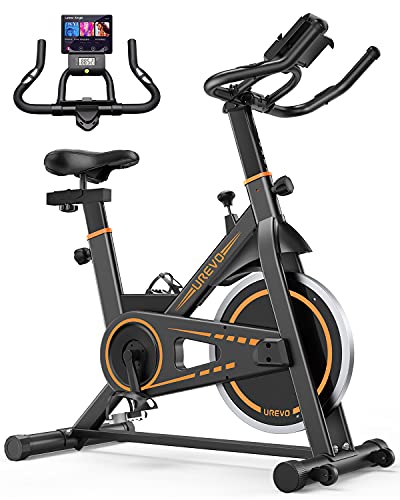
Some exercise bikes allow you to pedal in reverse, which is a great way to work muscles that aren't employed when you pedal forward. Bicycling backwards also target the latissimus Dorsi muscles in your arms and core muscles as well as the serratus anterior muscle in your back.
Interval Training
Interval training on a stationary bicycle can burn more calories faster than long endurance exercises. It also increases your cardiovascular fitness while reducing the chance of injury. In a high intensity interval workout, you alternate periods of pedalling at a fast pace with periods of lower effort. In a Tabata cycle, you'll pedal at a high speed for 20 seconds, before resuming for 5 seconds. Then, you repeat the cycle repeatedly. Beginners should start with short intervals and shorter repetitions. Elite athletes may gradually increase the work-to-rest duration or number.
Stationary bikes allow you to alter the intensity of your pedaling. Start by choosing a challenging speed and measure the intensity based on how you feel. For example on a scale of 10 points of self-perceived exertion, you should try to keep your heart rate at a minimum of 6 or 7. As you progress through your workout, you may increase the intensity and duration of your intervals from rest to work.
High-intensity exercises, whether cycling in the open air or at the gym can help you shed more fat and improve your cardiovascular fitness. In one study, researchers discovered that cyclists who completed HIIT exercises on a stationary bike for 20 minutes, four days every week for 8 weeks increased their oxygen consumption by 9% and this is comparable to the improvement seen in the group who did traditional cardio exercise for the same amount of time.
The nature of the pedalling motion and the way the stationary bicycle engages your legs develops leg strength in a natural way without putting pressure on ligaments and joints. This is crucial for people over 50, those with knee or hip problems, and those recovering from lower-body injuries or surgery. Running is a high-impact activity that can cause joint stiffness and pain. It is not recommended for people suffering from osteoarthritis.
The stationary bike is a vital piece of equipment for athletes recovering after lower body injuries or surgeries. It lets them continue training without putting excessive stress on their surgically repaired or injured joints. Additionally, it can be used to maintain the strength of legs and endurance during rehabilitation.
Cycling Indoors
If you're looking to get a great workout, but not leave the comfort of your home There are many fitness studios that offer classes taught by instructors riding special stationary bikes. These bikes can be adjusted to fit different body types and feature a weighted wheel to simulate inertia. They are also often equipped with pedals with toe clips like those found on sports bikes or clipless receptacles for use with cycling shoes. A lot of them also have a mechanism to adjust resistance or tension and some have dual-action.
The pedaling motion of a stationary bicycle helps strengthen the muscles of the glutes, legs and quadriceps. This is particularly when you are riding at a higher intensity level. The pedaling action also strengthens the core muscles, and if you choose a bike with handles, it can be used to work the back and arms. If you are doing a cycling exercise that requires you to stand on pedals and work the calves, you'll also strengthen the tibialis posterior muscle in the front of your leg.
There is evidence that suggests that cycling can help to reduce triglyceride and cholesterol levels in the blood, and also improves cardiovascular endurance and flexibility. In one study, participants briskly cycled for 45 minutes three times a week for 12 weeks. They burned 1,200 calories on average per session, shed body fat, and improved their endurance.
Indoor cycling is an exercise with a low impact. It can be completed by anyone of any age and with any body mass index. It is also beneficial for those who are overweight or suffer from conditions like knee or back pain. Individuals who are new to exercise or have a medical condition should consult with their physician prior to beginning any exercise.
A common injury sustained by stationary cyclists is forearm and wrist pain, which can be caused by poor gripping or putting your hand on the handlebars. It is also important to keep in mind that if you cycle for too long or over long periods of time, it can strain the muscles in the back. If you experience this kind of pain, try reducing the duration of your workout or intensity or adding some other strengthening exercises to the routine. Cross-training in conjunction with other activities, such as walking or jogging can also help avoid these injuries.